
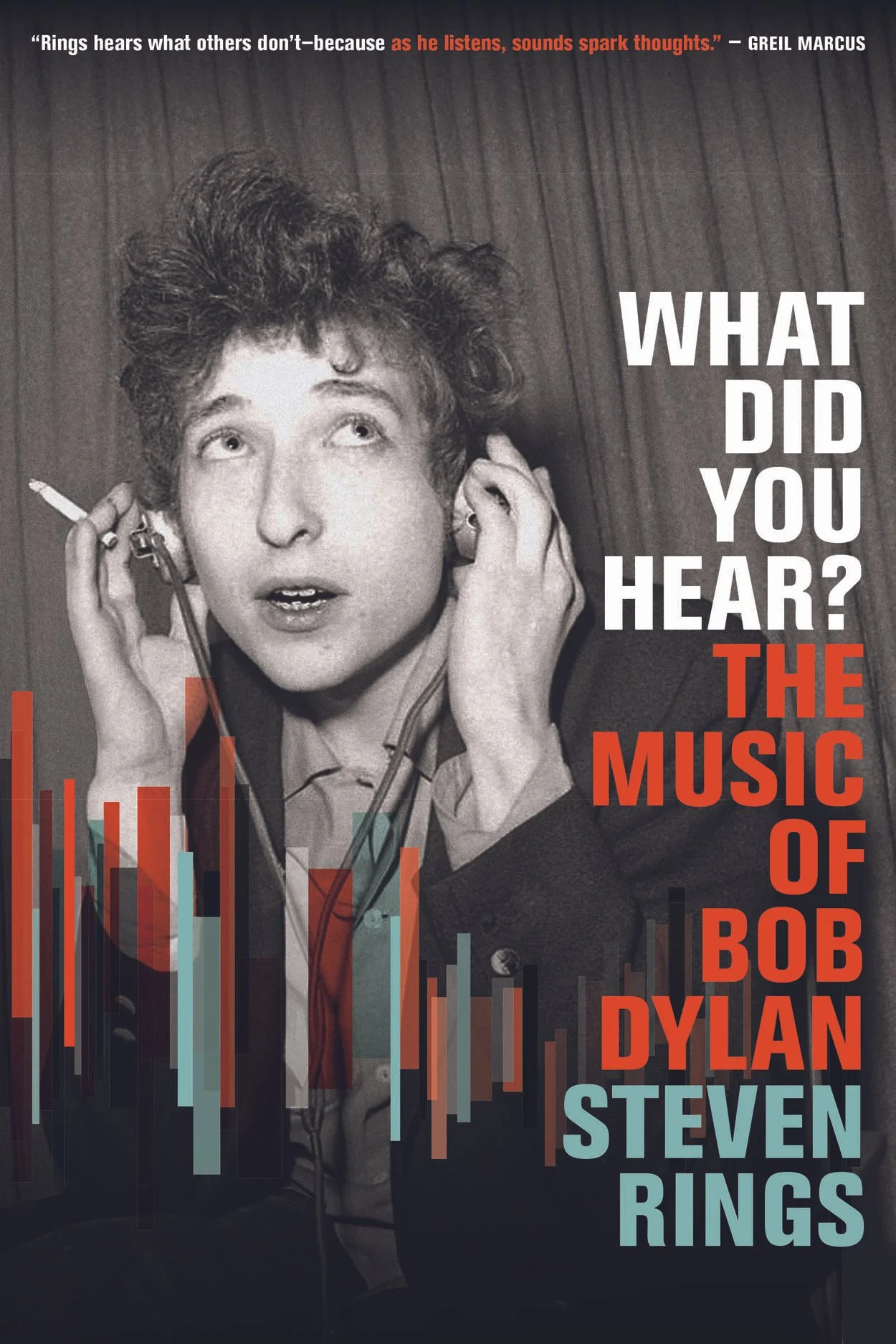
Thanks to Book Club Member Scott Buechler we know that this interesting Dylan picture is from the “Lightbulb” press conference in London, April 1965: click HERE.
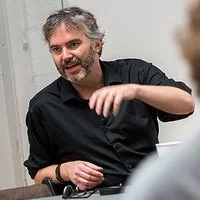
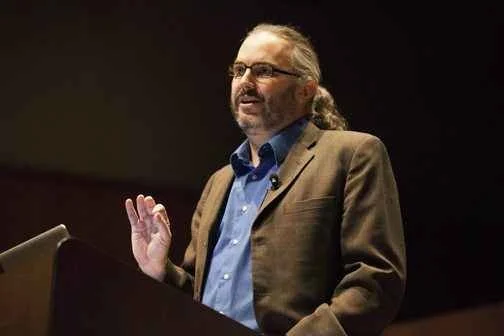
The Bob Dylan Book Club’s Book-of-the Month for November 2025 is the newly released (October 2025) What Did You Hear? The Music of Bob Dylan by Steven Rings, a professor of music theory at the University of Chicago (Rings will attend our meeting). Five Book Club members will lead our discussion: Jon Lasser, is a professor of psychology at Texas State University and teaches a Dylan course called The Art of Bob Dylan. Henry Bernstein is a Chicago-based lifelong Bob Dylan fan whose obsession has been featured in the New York Times, and hosts “Songs of Experience: A Bob Dylan Podcast.” He lives on the North Side of Chicago with his rockstar rabbi wife and their two Dylan-loving kids. Scott Buechler, (pronounced “Beekler"), a Dylan fan since the early 1960s, is retired in Efland, North Carolina, and sings and plays guitar and harmonica regularly at open mics and farmers’ markets, along with the occasional solo gig. Dominic Hartley is a long time Dylan enthusiast and writes about music for Fanfare magazine. Chris Williams has been an avid music and Dylan fan for as long as he can remember. He's a product manager at a high-growth start-up. In 1995, he was awarded a PhD in sociology from NYU. His doctoral thesis was on the virtual Led Zeppelin fan community. Peter White is a co-founder of the Book Club and a retired professor of ecology in Chapel Hill, North Carolina. He plays lots of music, and has been connected to Dylan since the age of 14. His band, The Bob Dylan Regulars performs at the Kraken this November.
In addition to What Did You Hear?: The Music of Bob Dylan, Professor Rings’ Dylan-related work includes: A Foreign Sound to Your Ear: Bob Dylan Performs ‘It’s Alright, Ma (I’m Only Bleeding),’ 1964–2009 (Music Theory Online, 2013), winner of the 2014 Outstanding Publication Award from the Society for Music Theory’s Popular Music Interest Group; On Bob Dylan’s Nobel Speech: Sound, Medium, and Genre in Sound Studies: An Interdisciplinary Journal 4.1; the 2012 Humanites Day Lecture at the University of Chicago entitled Here’s Your Throat Back, Thanks for the Loan: On Dylan Voices; and Dylan’s Bridges Revisited, a paper presented at the World of Bob Dylan 2025 conference in Tulsa. His first book was Tonality and Transformation (Oxford, 2011). He edits the Oxford Studies in Music Theory. He also co-edited The Oxford Handbook of Critical Concepts in Music Theory (Oxford, 2019).
Many books focus on Dylan’s lyrics (SEE A Bob Dylan Booklist). There are also quite a few books that describe Dylan’s work in the studio or in performance. While these books sometimes provide commentary on the distinctive musical attributes of Dylan’s songs (e.g., his voice, harmonica, phrasing, and arrangements), there are very few Dylan books that focus on the music itself from the perspective of a critical and structured analysis. The first book that came from the world of academic analysis in music theory was our July 2024, Book-of-the-Month, Listening to Bob Dylan: Experiencing and re-experiencing Dylan’s Music (2021) by Larry Starr, a professor emeritus at the University of Washington. With the publication of Steven Ring’s book, we are thrilled to have a second book that examines Dylan’s music from the point of view of music theory.
Dylan has emphasized that his lyrics and music are necessarily intertwined. In the ending for his Nobel Prize Lecture Dylan wrote Our songs are alive in the land of the living. But songs are unlike literature. They’re meant to be sung, not read. The words in Shakespeare’s plays were meant to be acted on the stage. Just as lyrics in songs are meant to be sung, not read on a page. And I hope some of you get the chance to listen to these lyrics the way they were intended to be heard: in concert or on record or however people are listening to songs these days. I return once again to Homer, who says, Sing in me, oh Muse, and through me tell the story.
Many aspects of Dylan’s music contribute to the impact of his songs on the listener. There are, for example, the rhythms of notes and words (the distinctive phrasing), the intonation and pronunciation of the words, the rhyming schemes, the tempo and arrangement, the chord structures, the instrumentation, the length of the verses and the length of the songs. The word “Dylanesque” has been mostly used with reference to Dylan’s lyrics, but Dylan, despite all his changes over the years, also is recognizable from his music, inspiring such phrases as “No one sings Dylan like Dylan” (an early marketing slogan used by Columbia records at a time when other artists were rushing to record his songs) or “Dylan always sounds like Dylan.”
Finding a distinctive sound—finding his own voice—was important in Dylan’s early development. Having seen his success, it may be hard for us to imagine that there was a time when he was, in fact, a complete unknown and unsure of how to be competitive—not just in making music, per se, but in finding and an audience and holding their attention. He wanted to make a life based on making music—that must have made the effort seem like a time of artistic life or death!
In Chronicles Volume One, Bob Dylan writes about an encounter he had with Mike Seeger (Pete Seeger’s half-brother) at a Greenwich Village party: He played on all the various planes, the full index of the old-time styles, played in all the genres and had the idioms mastered—Delta blues, ragtime, minstrel songs, buck-and-wing dance reels, play party, hymns and gospel—being there, and seeing him up close, something hit me. It’s not as if he just played everything well, he played these songs as good as it was possible to play them…what I had to work at, Mike already had in his genes…Nobody could just learn this stuff, and it dawned on me that I might have to change my inner thought patterns…now I saw that it would take me the rest of my life to make practical use of that knowledge and Mike didn’t have to do that…In order to be as good as that, you’d just about have to be him, and nobody else…The thought occurred to me that maybe I’d have to write my own folk songs, ones that Mike didn’t know…I wasn’t ready to act on any of it but knew somehow, though, that if I wanted to stay playing music that I would have to claim a larger part of myself. His goal was “to stay playing music” was still on his mind at his 1965 KQED press conference in San Francisco when he said that his goal was “to stay here as long as I can”. As he began to write his own songs, he “started to achieve some renown for [his] abilities” (quote from Dylan’s Nobel Banquet speech).
It was also clear from the beginning, from his first performances in Greenwich Village, and from his first album that Dylan had many influences and that his music was a unique blend of country, blues, and rockabilly (the liner notes for his first album list Hank Williams, Jimmie Rodgers, Jelly Roll Morton, Woody Guthrie, Carl Perkins, and early Elvis Presley.) Although he was a sponge for all the music around him, he was also establishing his own distinctive and instantly recognizable musical direction. Dylan has been quick to honor his musical heroes and influences, including via Theme Time Radio Hour with You Host, Bob Dylan, his book The Philosophy of Modern Song, and his Musicares speech.
—Peter White, November 2025